
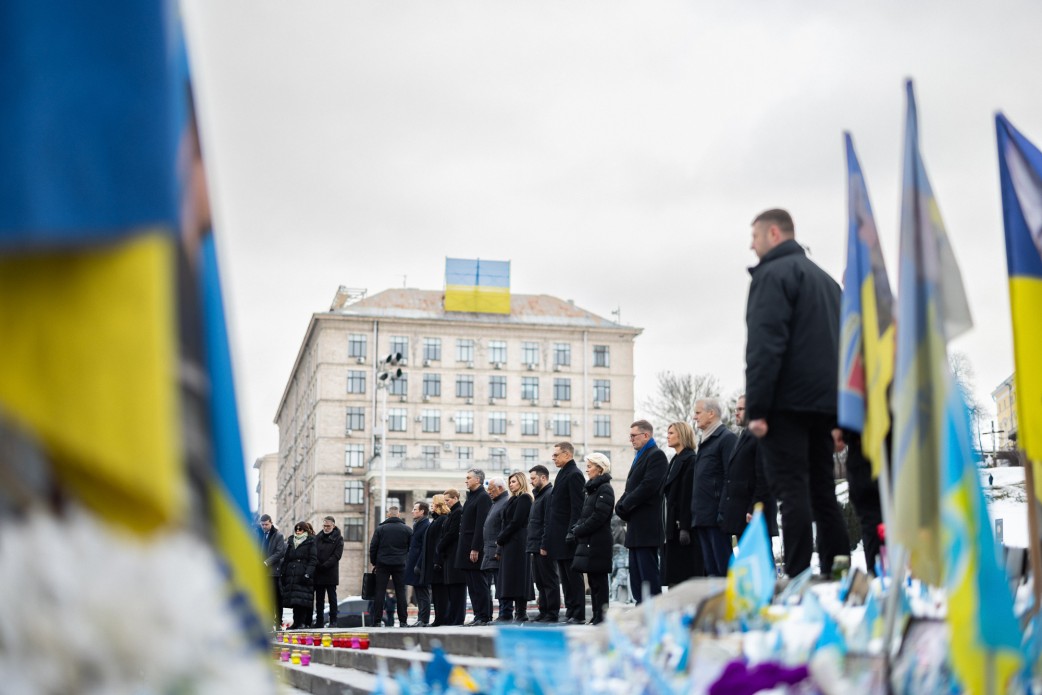
It was an honour to represent the UK Parliament on a cross-party delegation marking the fourth anniversary of the full-scale invasion of Ukraine.
The UK Government signed a historic 100-year partnership agreement with Ukraine last year and has long been a steadfast ally and supporter of Ukraine and its people. Today, more than 150 Ukrainians live in Oldham as part of the Homes for Ukraine programme, with residents opening their hearts and homes to provide safe sanctuary.
Because the war has resulted in restricted airspace over Ukraine, access must be achieved through a neighbouring country. The delegation therefore travelled via Moldova, where it was a pleasure to meet the Ambassador and her team, as well as parliamentarians and the Speaker of the Parliament of Moldova.
The first leg of the visit was to the port city of Odesa, which has endured almost daily attacks on its infrastructure and residential areas. During our overnight stay, we were called to the bunker as an air raid siren sounded, quickly followed by drone and missile bombardment in the neighbourhood where we were staying. At dawn, reports confirmed that four residential blocks and a local school had been struck. It served as a stark reminder of how everyday life continues under the shadow of war.
We visited the nearby port area to hear about the impact of the war on exports, particularly given Ukraine’s critical role in the global food supply. We also visited the awe-inspiring Odesa Opera House, one of many magnificent buildings reflecting the country’s rich cultural heritage.
From there, it was a long drive to Kyiv for the Justice Conference, which focused on the tens of thousands of abducted Ukrainian children taken into Russia and placed under forced adoption, and for the annual YES Conference, with discussions on strengthening the international coalition to support Ukraine and bring the war to a peaceful resolution, held alongside the fourth anniversary commemorations.
Like Odesa, Kyiv remains a key target of Russian aggression. Once again, we spent the night in a bunker (a hotel car park) as a significant attack saw ballistic missiles and drones raining down on the capital. Most of our official engagements took place in Kyiv. We visited residential districts where military and civil support centres had been established to assist hundreds of thousands of residents enduring temperatures of -20 degrees after heating supplies had been cut off. We also visited a rehabilitation centre supporting troops returning from the front line with life-changing injuries, met with members of the armed forces, and held discussions with fellow Members of Parliament. These included attending the official opening of the plenary session and meetings with representatives from the Office of the President.
One visit that was, I suspect, on many MPs’ wish lists was to Chernobyl. The abandoned town of Pripyat was a haunting highlight. We also visited Reactor 4, the reactor that exploded in 1986, causing the nuclear fallout that followed. It is now encased in a vast protective structure designed to prevent radiation leakage. The site remains a highly secured zone and has been targeted by drone activity during the conflict.
Beyond the occupied territories in the east and south, daily attacks across the country have become a tragic reality for millions. To witness war once again in Europe, something many believed had been consigned to history after the sacrifices of previous generations, is deeply sobering.
One moment will remain with me for a long time. While visiting a residential building that had been bombed months earlier, we were shown the damaged structure and the community support centre established nearby. As we walked around the site, we saw a woman standing silently, clearly distressed. Through a translator, we learned that the rubble before us had once been the home she shared with her family, destroyed in an attack that killed her six-year-old daughter.
The main conference and commemoration brought together world leaders, defence ministers, foreign secretaries and parliamentarians. The UK delegation included senior representatives, and it was a particular privilege to meet Ruslan Stefanchuk, Speaker of the Ukrainian Parliament, for discussions on sustaining international support.
As part of the cross-party delegation, I had the honour of laying a candle in remembrance. Few expected the war to last four years, and some doubted Ukraine could withstand the scale of Russian aggression. It is also the case that Russia has been supported by the Iranian regime with thousands of drones and, according to widely reported assessments, hundreds of ballistic missiles used to cause death and destruction on European soil.
Russia underestimated the resilience and determination of the Ukrainian people. However, continued and strengthened support will be required to secure a lasting and just peace.
I am proud of the leadership the UK has shown, and proud too of the people of Oldham who have stepped forward to offer safe sanctuary to those in need.
Slava Ukraini.
 Jim McMahon OBE MP