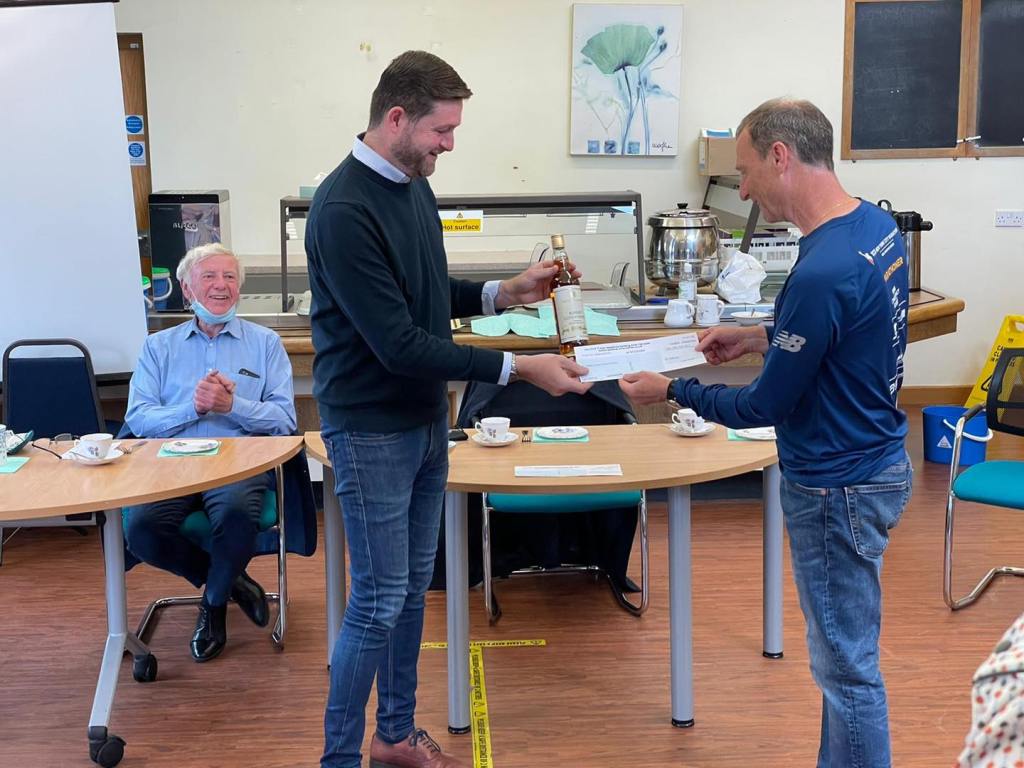
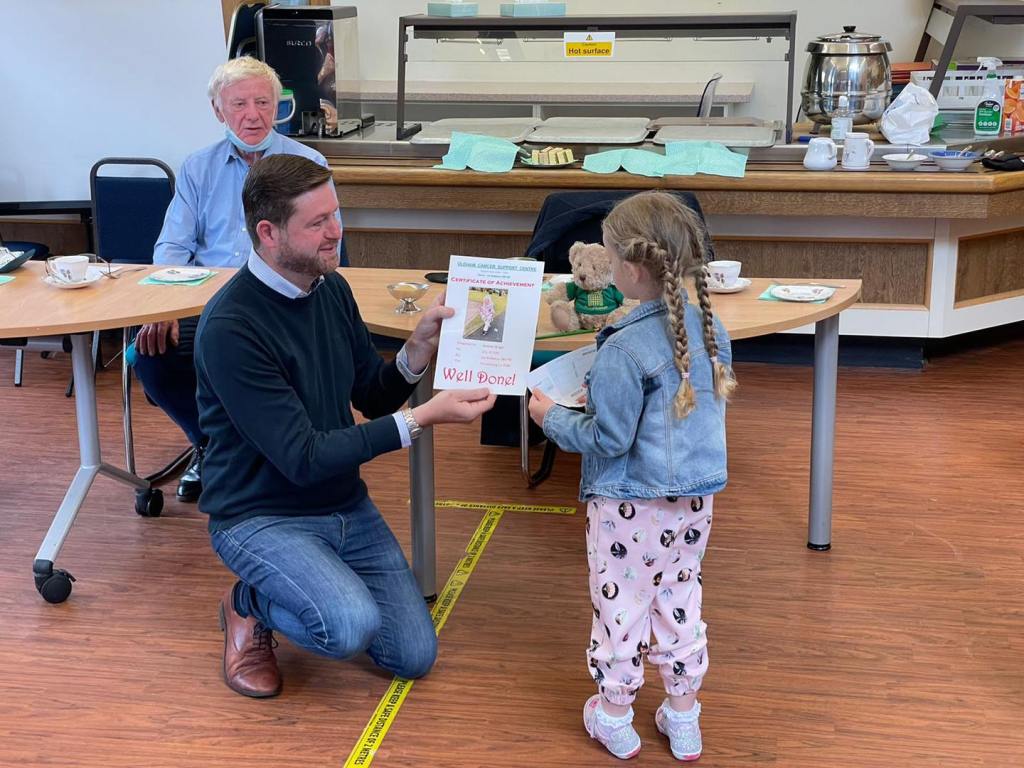
It was great to support Oldham Cancer Support by thanking two amazing fundraisers!
Well done to Colin who fundraised for an Everest Marathon (next May all being well) and Summer, aged four, who walked a mile a day in March, both exceeding £1,000 each for the charity.
I have been a long-standing supporter of Oldham Cancer Support since it was set up around 15 years ago and honoured to be a Patron. The sense of family and compassion shown by all the trustees and volunteers is outstanding.
Oldham West and Royton MP Jim McMahon has condemned the racist abuse that England’s young players have faced after last nights European Championship Final.
Speaking this morning the Oldham MP said, “These lads have inspired our country over the last few weeks, they’ve shown the very best of our country and they’ve taken us to heights none of us imagined before the tournament began.”
“To wake up this morning and see the torrents of abuse that Rashford, Sancho and Saka in particular have received is disgusting, and yet sadly not at all surprising.”
“Twitter, Facebook, other social media companies and the Government can stop this constant cycle of abuse. Standing idly by with warm words is unacceptable.”
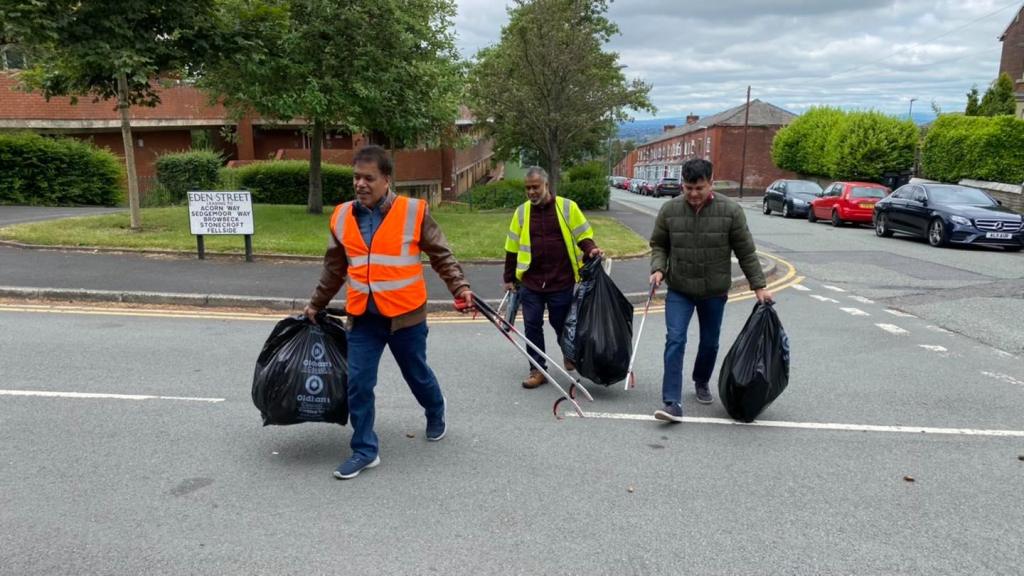
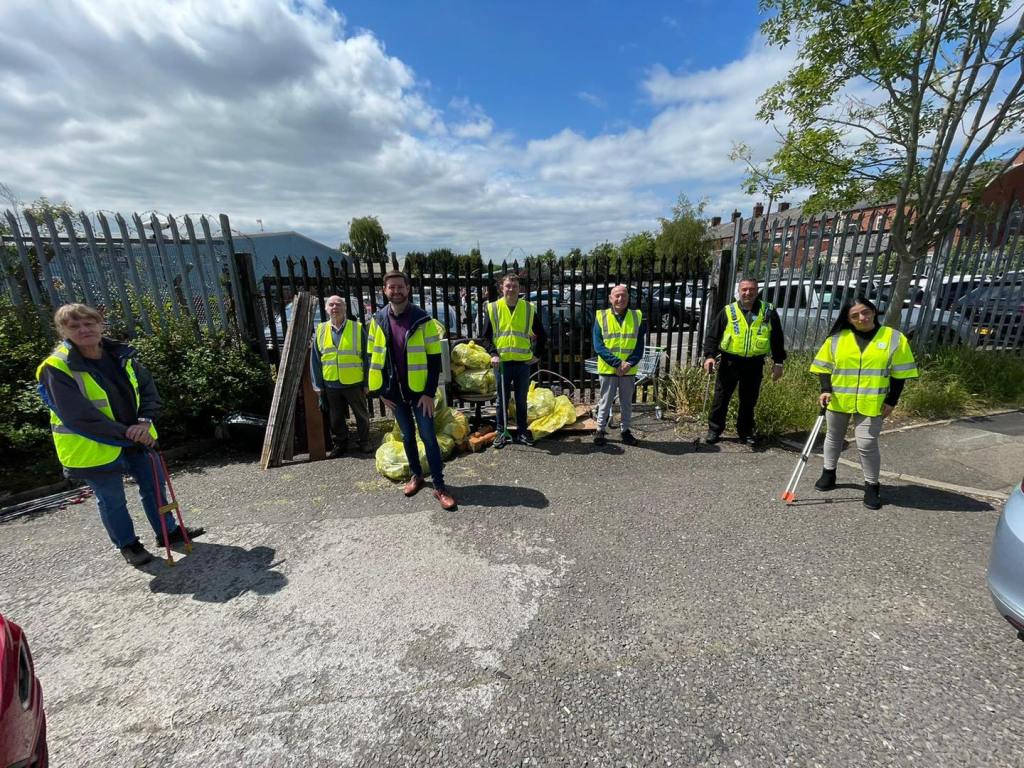
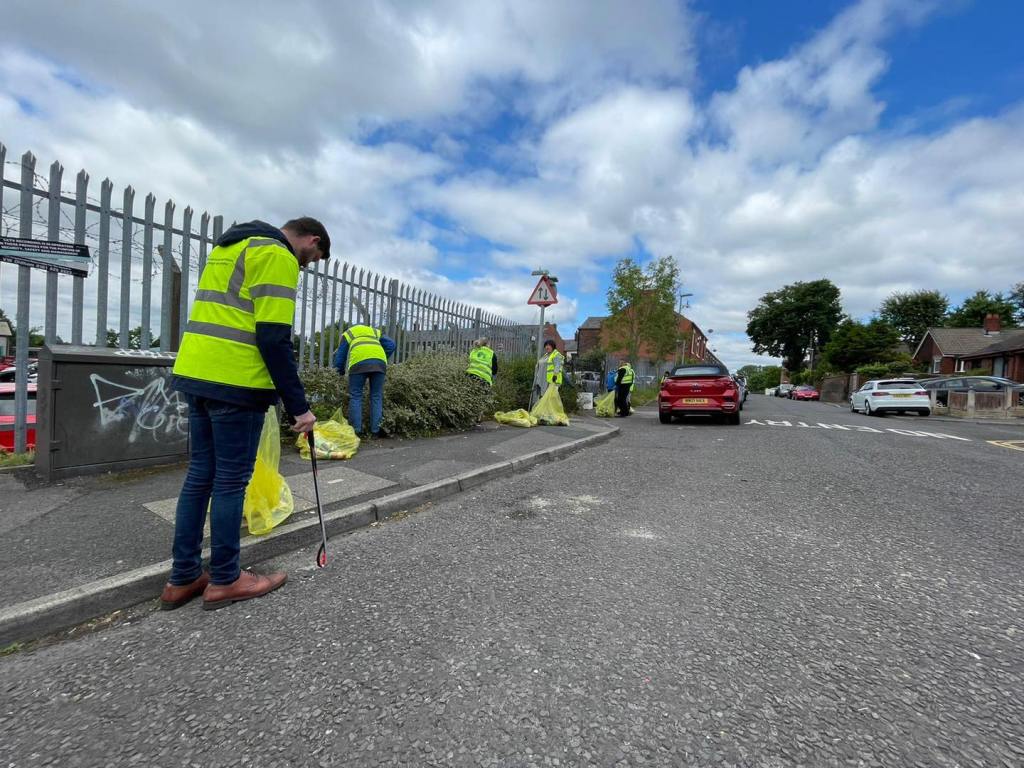
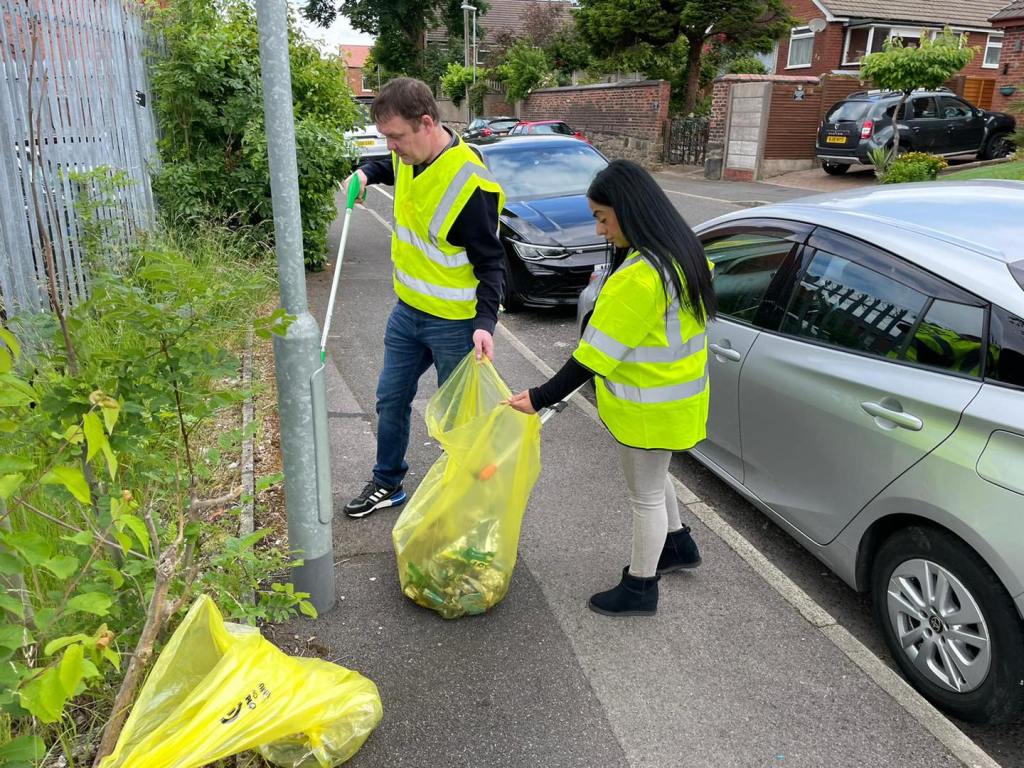
A great day helping to tidy up Oldham (Coldhurst, Barker Street) and Chadderton (Stanley Road) as part of a wonderful community effort lead by local councillors and volunteers.
Determined to make every street clean and cared for. A big task but will make a huge difference.
There are now regular sessions across the borough and residents are encouraged to come along and get involved. I’ll get full details of sessions and post them as soon as I am able.
I’m really grateful to Oldham Council and ward councillors for showing leadership on this as much as the big strategic projects are important for the future of our town and our high street.
People have the right to know that the streets where they live are well cared for, tended to, and people can be proud of where they live.
It’s got to be a community effort, that’s why I’m so glad so many residents in Chadderton South joined us on Saturday, it’s important of course that we’re all out – but it’s about building a wider movement, and taking back control of the places where we live.
Earlier this week I wrote to the Health Secretary urging him to provide Oldham Council with more resources to allow localised community based work to be carried out and prevent any new emerging strains of Covid-19 taking hold in Chadderton, Oldham and Royton as we lift social restrictions.
In some of our communities in Oldham vaccination take-up is not where we need it to be, especially when compared to others. We now need to get on with working with these communities and community leaders to get to the bottom of why that is, without demonisation, we are where we are and we must work together to improve the situation.
Surge vaccination should absolutely be a priority, so must resources needed to ensure those that have not yet been vaccinated are encouraged to do so, and work must be done to reassure anyone who has concerns about the safety and importance of getting vaccinated to protect the whole community.
We cannot be complacent and find ourselves in a situation where we see more devastating social and economic restrictions placed on our town again because the resources to prevent that and move us in the right direction were not forthcoming.
I know that last year when I joined teams from Oldham Council out on the streets of Oldham, going door-to-door with testing teams, the community responded positively. My instinct says that we may require a similar street level effort, and we should learn from places like Leicester who have focused on empowering community leaders in their vaccination programmes.
Just last week I raised these issues and other with the Director of Public Health and other in Oldham’s public health team. As a local MP I want to ensure that the Council and public health teams are adequately resourced for the job at hand, I will continue to work with the civic leadership and public health teams here in Oldham to push for the best outcomes for our town.
The full text of my letter:
The Rt Hon Matt Hancock MP
Secretary of State, Department of Health and Social Care
39 Victoria Street
London, SW1H 0EU
26 May 2021 Ref: JM33762
Dear Matt,
You will know that frontline staff are working around the clock to protect the local population in what has been the most testing period for the nation. I want to pay tribute to workers in Oldham for all they have been doing since the outbreak of Covid-19, when our town was under the spotlight for high infection rates, and the resulting social and economic restrictions which hit us hard. As the vaccine roll-out has progressed, they have again demonstrated their commitment and public duty and we remain extremely grateful to them all.
I am writing to you as the Health Secretary because I remain deeply concerned that the government is not making the required progress to ensure that the vaccination is reaching all parts of the population in Oldham, and that take-up rates remain low in Pakistani and Black African communities.
Data provided to MPs on 12th April showed the rate for Cohorts 1-4 amongst the Pakistani community stood at 67.16%. The latest data provided to local MPs on 24th May, it had only risen to 71.08%. Likewise, for Cohorts 5-9, rates stood at 56.48% and grew to just 62.4% in the same period.
Unless we achieve higher rates of vaccination, the risk of new strains gaining ground is greater – particularly given the apparent lack of strategy around the government’s border policies.
While the same level of growth across that period is in line with the White British community, the significant difference is that rates now stand at 94.95% across Cohorts 1-4 and 87.27% for Cohorts 5-9 for White British people.
In the same period for Cohorts 1-4 the Bangladeshi community saw rate increase to over 82.99%, with rates at 91.57% in the Indian community. Likewise, those with Black Caribbean ethnicity are showing rates of 86.52%.
It is important that targeting is evidenced based, and critically community based. Surge vaccination should be a priority, but this must be accompanied by the resources needed to ensure those who have not yet taken up the vaccine do so and to reassure those with concerns that the vaccine is safe and important for the protection of the whole community.
I fear that many vulnerable people are not getting the protection they need and that not enough resources are being provided to allow localised community-based work to be carried out, door-to-door if required. I am also concerned that as the country comes out of social restrictions, any emerging new strain detected locally may lead to intense local action later. We cannot see more devastating social and economic restrictions – it is vital we learn the lessons 2020 has taught us.
As a local MP I want to be assured that every route is being taken to secure a greater level of take up and that local councils and public health teams are adequately resourced, given the intensity that it is likely to need.
My instinct is that we were successful when we were at street level. When we visited door-to-door for testing in the wards over summer 2020, those I visited responded positively. We should learn from areas like Leicester, that have placed vaccination clinics in places of worship, community buildings and focused on empowering community leaders in their vaccination programmes. Having more localised vaccination centres supported by door-to-door activity could make a difference, and I know the civic leadership in Oldham will take the lead, as will I personally in that effort with public health officials.
But to do that we need resources now, not later if we witness a new strain taking hold in an under-vaccinated part of the borough.
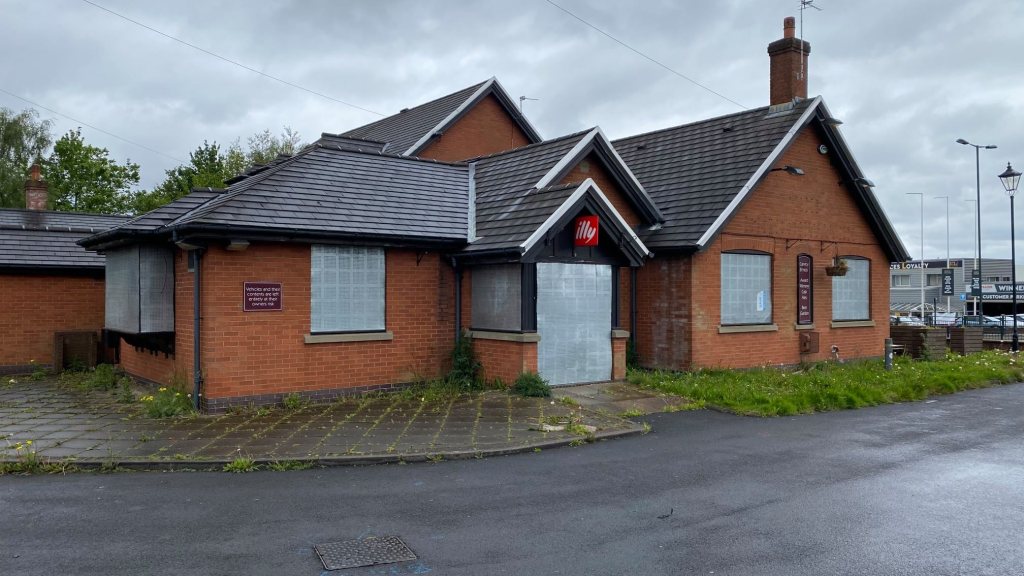
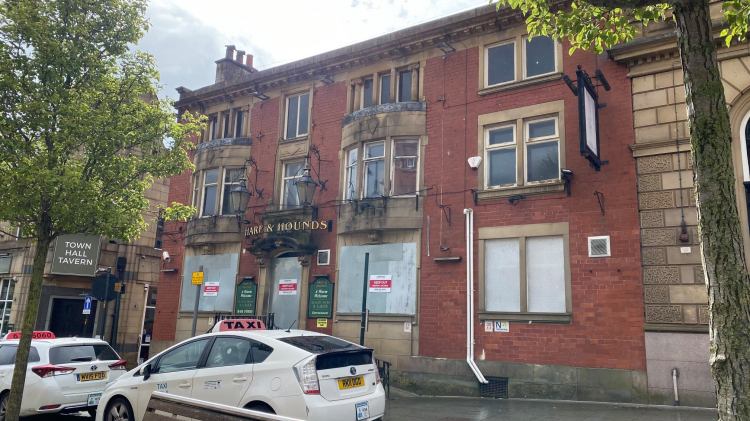
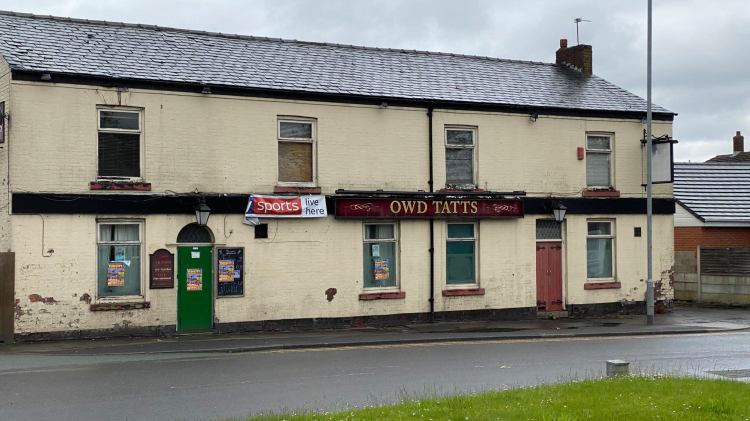
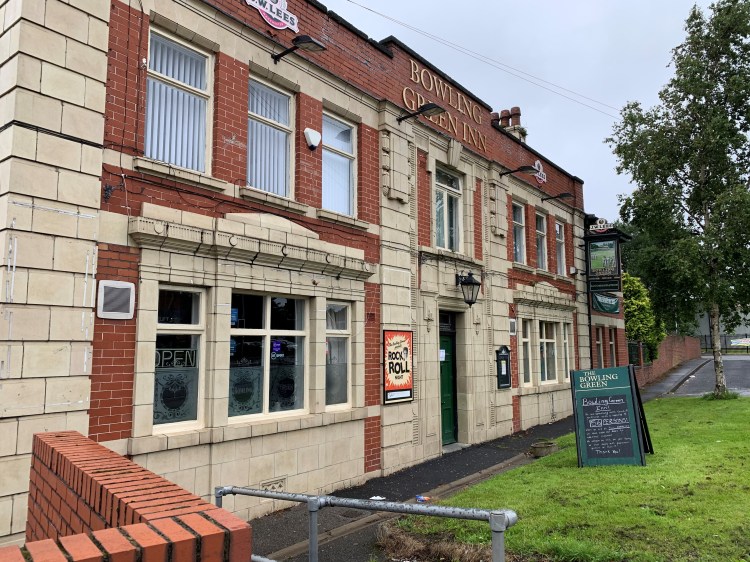
Not all pubs have reopened, some may never welcome regulars again.
Pub closures have been a running concern as many which lined main roads, served local estates and communities are lost for ever, unfortunately too often also seeing poor quality conversions or demolition.
The old boozer, which was the centre of work and community life feels increasingly a thing of the past as habits change and so too does the industry, with a much greater shift to food and dining.
For many working class communities the housing which sprung up to accommodate the mill and factory workers which were such a strong feature of towns like Chadderton, Oldham and Royton were interspersed with buildings of note which stood out; churches, banks, and pubs. Each added to the character of the neighbourhoods they served and in the case of the church and the pub were where people came together. As church attendance diminishes they too are under significant threat, and with them the risk that another historic building could be lost.
While there is little any government can or should do in tackling declining church attendance, it must have a better plan to deal with the historic building left behind. And for the local pub much more should be done to step in and provide communities the support they need to stop the loss of what can still be viable assets.
The Hare & Hounds, Oldham. Owd Tatts, Chadderton. The Bowling Green Inn, Hollinwood.
When the Bowling Green pub at Hollinwood faced demolition to make way for (another) KFC and Starbucks Drive-Thru the response in support of its loss pointed to the nearby Spinners Arms and Bridgewater Inn. As we emerge from the pandemic and the terrible impact on hospitality it is clear we will see some pubs never return.
Today the boards remain on the Spinners Arms, and the metal shutters lock out the old regulars from the Bridgewater Inn, with local rumours it may become (another) McDonalds Drive-Thru.
We’ve also seen the Hare and Hounds which was a longstanding town centre watering hole, and the former Old Tatts at Chadderton, which was under pressure before the pandemic hit.
More must be done to give power to communities to come together and fight to save their local pub. They are not just places to drink, they are places to socialise, to feel connected and to be part of a community. As isolation and loneliness only seems to get worse, it is vital we do not loose viable facilities.
None of us expect a pub with few customers to remain open while the owner takes the hit. But it is a fact that some pubs which have a following are being put at risk just because they are seen as ripe development opportunities, either by property developers or multi-national corporations keen to see every high street and main road a carbon copy.
There is a route through registering pubs, libraries, and a host of other facilities as an Asset of Community Value. While it does not stop owners deciding to sell up, that of course is their right, it does allow for the local community to step in. Nominations to list assets of community value can be accepted from any group of at least 21 local people who appear on the electoral roll within the local authority, or a neighbouring local authority. The names must also be from separate households. Love it? List it! is the Co-operative Party’s campaign to help communities take the first step to protect the loved local places like parks, pubs and post offices from being sold-off.
We’re aiming to list over 1,000 local spots as “assets of community value” and fighting to give communities more powers to protect and eventually own the local places that bind them together.
In the recent budget a £150m fund to help communities take over local pubs at threat of closure was established, meaning there is financial support.
Under the fund, which will open in the summer, community groups will be able to bid for up to £250,000 of matched-funding to help them to buy local pubs to run as community-owned businesses.
Though we can’t save every closure, I am keen to do all I can to help local communities list properties and ensure we retain these vital community facilities.
Not all pubs have reopened, some may never welcome regulars again.
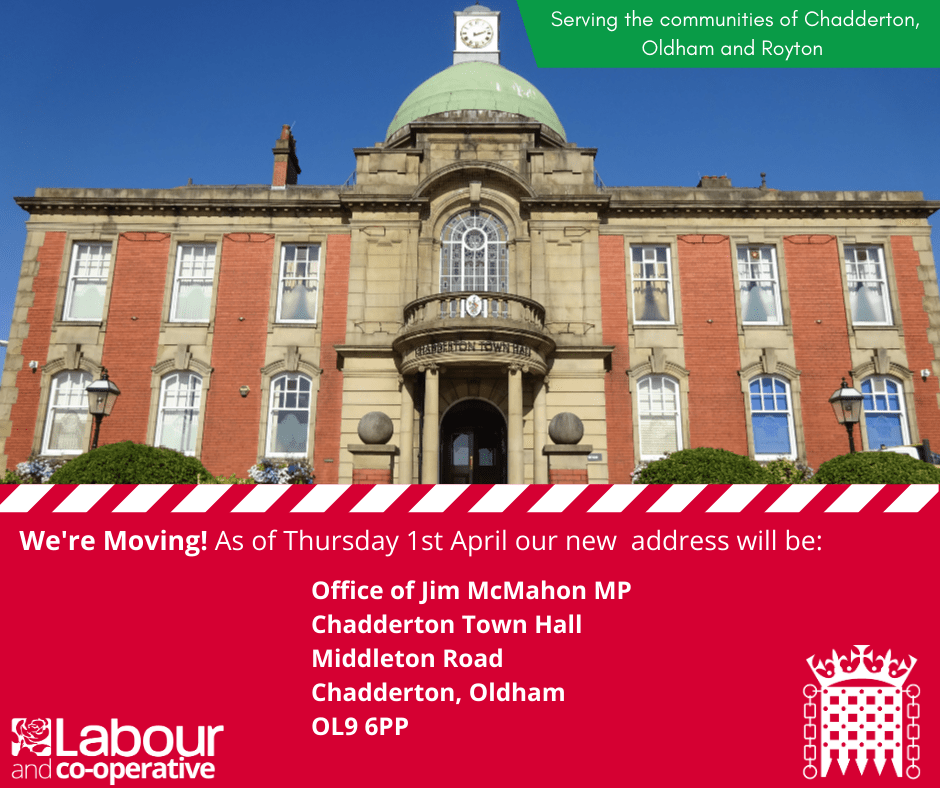
We are relocating our constituency office in Oldham.
Many of you will know that for the past few years we’ve been located on the top floor of the GMB building on Union Street, but from tomorrow we’ll be based at Chadderton Town Hall.
When the lease at Union Street came up for renewal we decided to reassess our needs and decided we needed a constituency office that was more accessible once we begin meeting people again. I’m delighted that we have managed to lease vacant space at Chadderton Town Hall, which allows for full disabled access with a lift, free visitor parking and is on a main bus route – something we lacked at Union Street. We have the added benefit that we increase the use of an important public building and keeps the rent we pay in the public sector rather than paying a private landlord elsewhere in the town.
Importantly the location is central to most parts of the constituency too.
From tomorrow (Thursday 1st April) our new postal address will be:
Office of Jim McMahon MP
Chadderton Town Hall
Middleton Road
Chadderton
Oldham
OL9 6PP
There will be a post redirect in place for the foreseeable future to ensure any correspondence sent to Union Street reaches us at our new address. I would like to thank the GMB for supporting me as a new MP setting up a new office and for accommodating me and my team over the years. My office supports thousands of constituents each year and whilst my staff are still working from home for the time-being we will continue to support residents remotely during the lockdown.
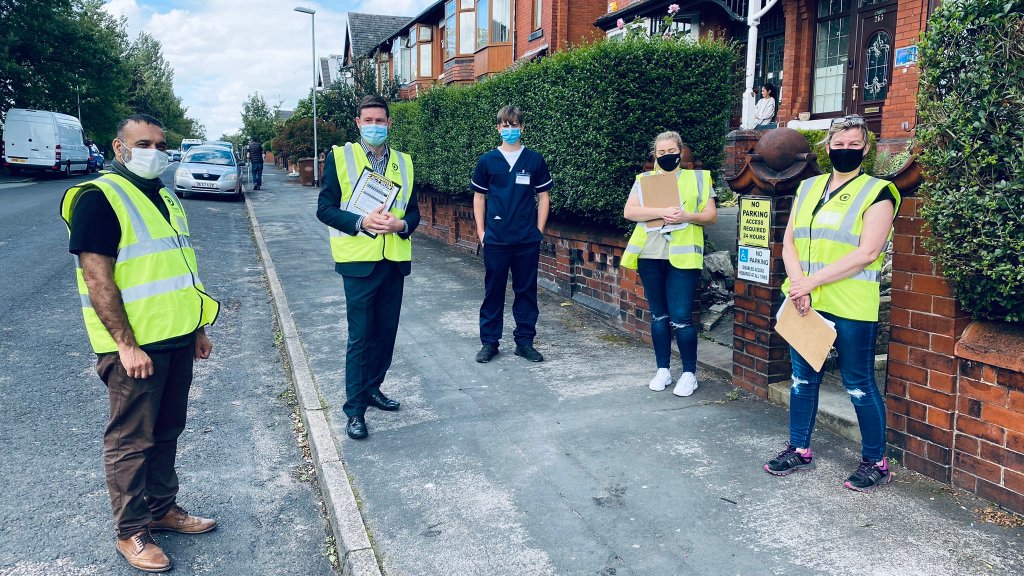
August 2020: Out with Community Engagement Teams from Oldham Council, with Cllr Shoab Akhtar
Oldham West and Royton MP Jim McMahon has hit out at the government after a report by the Public Accounts Committee described the “the unimaginable cost of Test & Trace failed to deliver central promise of averting a second and third lockdown”.
Jim McMahon MP said, “Just imagine what our local public health team in Oldham could’ve done if they’d have been properly resourced, the outstanding work that teams in Oldham have been doing going door-to-door and engaging with our community could have been scaled up massively.”
“But instead because of this Conservative Government’s incompetence, a reliance on consultants costing thousands of pounds per day and public contracts going to friends of the Conservative Party billions of pounds in taxpayer cash has been wasted.”
“This obsession with outsourcing must come to an end sooner rather than later, and contract tracing should be ran by our local public health teams as Labour have been calling for months now. Councils were promised ‘whatever it takes’ at the start of the pandemic, it didn’t take long before the Government rolled back on that, but we’d be in a lot better state if the money funnelled to management consultants through Test and Trace was going to our local councils instead. ”
New analysis by Labour reveals that Chancellor Rishi Sunak will hit all of our NHS heroes with a real terms pay cut this year, as well as other key workers who have kept the country going throughout the pandemic.
This includes at least 9,3000key workers in Oldham West and Royton– the nurses, teachers, police officers and Armed Forces personnel on the front line of the battle against Covid-19.
On Thursday, the Government revealed that they intend to cut the pay of all NHS staff relative to inflation this year.
This comes after the Chancellor announced a ‘pay freeze’ for all other public sector workers earning above £24,000 in 2021-22. Those earning less than £24,000 were promised “a fixed increase of £250”.
Taking into account inflation over the next fiscal year, that means every non-NHS public sector worker earning over £18,000 will also get a real terms pay cut.
In Oldham West and Royton, this means 1,183teachers will see their pay cut, as well as 17,000 police officers and over 90% of the 1,840 Armed Forces personnel based in the North West.
On top of the pay freeze, the Budget also confirmed a one-billion-pound council tax bombshell and a cut to Universal Credit in six months that will hit those who can least afford it.
Labour has condemned this triple hammer blow to people’s pockets as totally irresponsible when the economy is so fragile and is calling on the government to scrap its plans to hit family finances.
Making people worried about making ends meet will pull spending out of local high streets and small businesses, damaging consumer confidence at the very moment the Government should be building it up.
Jim McMahon MP said:
“Last week’s budget has confirmed the what many of us already knew, that this Conservative Government have the wrong priorities. Frontline key-workers have literally risked their lives keeping our country going throughout the pandemic and now the Chancellor is effectively rewarding them with a pay-cut.”
“Not only is it morally wrong it makes no economic sense, families having less money to spend means local business will suffer and our wider economy will take longer to recover.”
“And just this morning the NHS boss Simon Stevens confirmed that our wonderful NHS workers were in line for a pay-rise more than double what the government are now offering.”
“It’s wrong, and it shows that this Government’s priorities are out of touch with working people across Chadderton, Oldham and Royton. The Government have to rethink this and cancel plans to cut pay for nurses, police officers and teachers.”




 Important Constituency Office Announcement