Local services are the backbone of our communities. From healthcare and education to public transport and essential community programs, these services directly impact our quality of life. That’s why securing proper funding for them is my priority in Government.
We must ensure that every pound invested goes where it’s needed most – to support the people who rely on these services day in and day out. It’s about keeping our community strong, resilient, and thriving.
That is why I am proud of our funding settlement as it will provide over £69 billion for local government across England, and have a material difference for towns such as Oldham. This cash increase will help meet the demand that the Council is facing and ensure that vital public services are there for when you need them.
I’m thrilled that £20 million has been secured for the Community Regeneration Partnership in Oldham! This funding will help breathe new life into our high street, boost housing development, invest in our cultural and sports facilities and support local businesses.
Through collaboration between our local authority, the Government, and important stakeholders, the Community Regeneration Partnership will create sustainable developments that meet local priorities and local need. This will include building 2,000 new homes, investing to sports and educational pathways, and developing a new outdoor market in George Square.
This is a huge win for Oldham, and it’s a testament to the hard work and dedication of our community leaders, partners, and residents. This investment will help us break down barriers to opportunity, put more cash into people’s pockets, and bring vibrancy back to our community.
Together, we are building a stronger, more connected future for our town.
We are determined to find a path that ends Russia’s illegal war and ensures a just and lasting peace that secures Ukraine’s future sovereignty and security.
Local people have shown incredible solidarity, with many even opening their homes to families in need of sanctuary. They understand that it’s not just words but actions that truly matter as we continue working to secure peace on Europe’s soil.
This week has been busy getting out and building out the devolution programme, but before that the week started with an important joint briefing with the Local Government Association and Cabinet Office on the work we are doing to get ahead of the crisis in adult social care and children’s services so that we invest more in prevention.
Quickly followed by an appearance in from of the Select Committee in Parliament to answer questions as minister about how devolution will recognise the essential work of local councillors by giving them more power to be able to continue their work and so frontline public services can improve in a way that people can see, feel and value.
With the usual batch of internal meetings on the work we are doing to deliver a fair funding settlement, building on the work we did this year for councils, and a significant programme of local government reorganisation in the remaining 21 two tier county areas. Many of these, and meetings like the Speakers Commission where we approved appointments to bodies like the Electoral Commission also held this week do not receive public coverage but are essential.
Likewise with the many pieces of legislation signed off, some technical, others like the extension of support for those who received single persons discount but have since taken in families as part of the Homes for Ukraine scheme. A small example of the range of support given in our firm solidarity of Ukraine and its people in the face of Putins aggression.
And a rare break from Westminster took me up to Cumbria—one of six areas on track to elect a mayor next May, bringing with it serious powers and investment.
This included a fantastic visit to Carlisle to have a walking tour of the local regeneration and to see the huge potential for growth post-devolution, and we managed to bump into a local historian and tour guide who offered a whistle stop visit inside the wonderful cathedral.
Also had the chance to stop by the New Balance trainer factory—a brilliant example of a growing, successful manufacturing business that could benefit even more from our devolution agenda. What really stood out was the generations of families working there—a real sense of pride in the place. They’re investing in the site, and I have to say, there’s something quite special about a factory right on the shoreline… especially when you end up chasing runaway lambs back into the field next door! Not a bad day in the office.
The sixth Convention of the North was held this where political and business leaders from across the north of England came together in Preston, including the Deputy Prime Minister who addressed the convention.
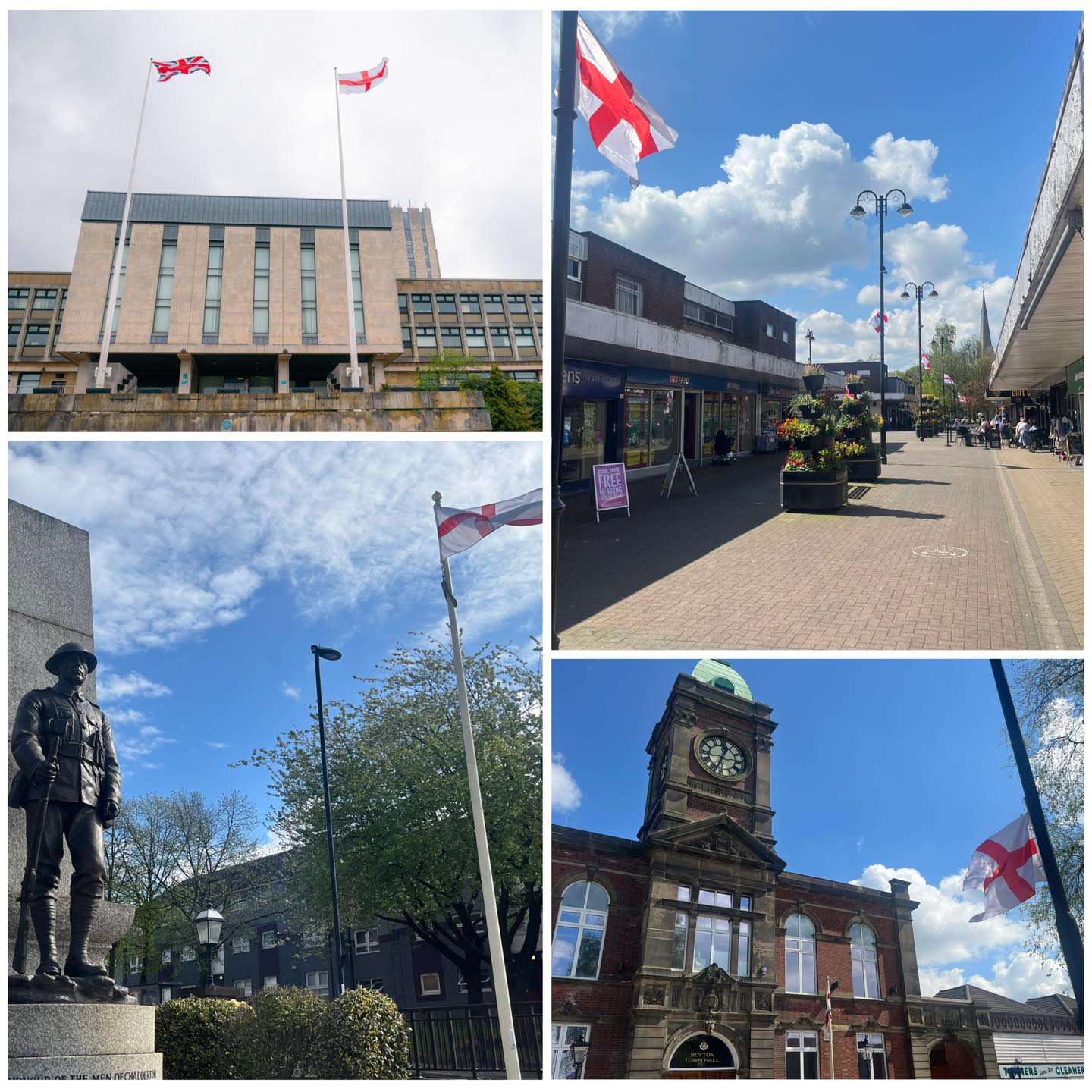
For me, a real highlight was speaking at the evening dinner in the magnificent Lancashire County Hall—which, until 1974, was the home of local government for Oldham, Chadderton, and Royton.
The North is ready to drive growth, create jobs, and lift living standards, and this Labour government is right behind that mission. With devolution rolling out in Hull and East Yorkshire this May, and (all being well) Cumbria, Lancashire, and Cheshire next May, we’ll soon have the full devolution map of the North complete—and that will be a proud moment.
Progress continues on our work to turn around the fortunes of the pitches on West End Street in Coldhurst so we can realise our ambitions of turning the venue into a community institution that can properly serve local people in the way they deserve.
The previous Labour government brought the pitches to the area but 14 years of cuts under the Tories put this sports venue under threat, only being saved due to the hard work of local Labour councillors.
After visiting before the election in July to reaffirm our support for it to remain a community facility and be refurbished; we visited again in August with Councillor Jabbar to see how the site could be put to better use for local people and be turned into a facility run for and by members of the community; before then hosting a clean-up event in October with local organisations, volunteers, community groups and the Council to begin the fight to transform the pitches as a revitalised community hub in the hands of local people.
Ever since, hard work has been put in behind the scenes to create the framework for local co-operative ownership of the venue. Thanks to the work of our Labour-led Council, we are now in the process of:
– planning engagement with the surrounding community with a series of of meetings/engagement opportunities to encourage resident involvement to help shape the co-operative’s priorities;
– exploring initial funding options to secure the long-term viability of the site and surveying the site to understand the costs of ensuring the pitch is usable & in good condition; and then
– planning engagement with stakeholders such as engage local sports clubs, schools, & VCFSE organisations to establish usage agreements and programming opportunities.
We want to get the most out of this opportunity for the community so the pitches are well used and local people are empowered.
Local Councillors are on the frontline doing the work which makes a difference in so many people’s lives. Many vulnerable people rely on them in places like Oldham, Chadderton and Royton across the country.
In Oldham, it is our dedicated councillors who are pioneering change, developing the community, and meeting service demand. Devolution is about recognising how essential the work of councillors is, and giving them more power and agency to be able to continue their work and get even more things done.
If we want to improve public services in a way that people can see, feel and value, then we need to intervene first in the areas where the last government went first to dispose of public assets, most often in areas with high levels of deprivation and need.
With our agenda for English Devolution, we don’t just want to move power away from Westminster to Metro Mayors, we also want to empower those in the community who, with more agency, can deliver even better results for local people.
Today the Institute for Apprenticeships and Technical Education (Transfer of Functions) Bill will return to Parliament for its second reading.
I welcome any measure that will support technical education and break down barriers for young people to enter the world of work. I believe it is a huge positive that the Government is finally paying attention to the benefits of alternate routes to work, as this is the best way to meet our skills gap.
This Bill aims to streamline the skills agenda through bringing powers into the control of the Department of Education to oversee the design and approval of apprenticeship standards and qualifications. This would streamline the approval and review processes, making it easier to introduce new qualifications and adapt to emerging skills gaps more swiftly.
It shall also bring about the establishment of Skills England, a designated executive to manage the skills system. Having a more unified approach to skills development would allow for better coordination between different areas of education and industry. This could lead to more targeted and effective training, ensuring that apprenticeship frameworks are designed with input from key stakeholders with skin in the game. Working with businesses will be crucial to ensuring apprentices are best prepared for the job and will have mutual benefit for the sector.
My background is in technical education, so I know first hand the opportunities it can provide. I, therefore, back the Government’s ambition to support apprenticeships, streamline the sector, and enable young people to develop skills outside of a classroom.
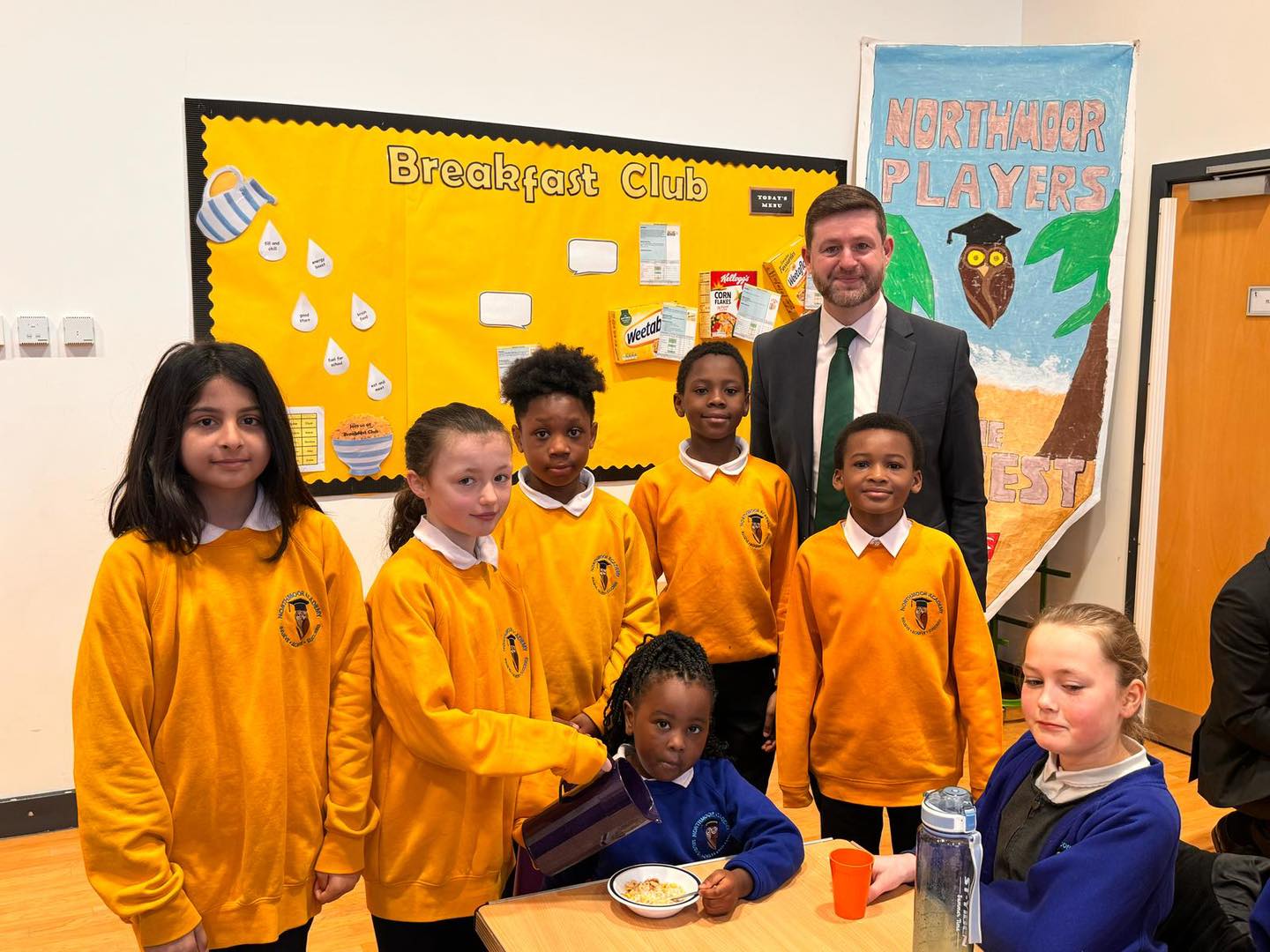
Our Plan for Change is rolling out the first 750 free breakfast clubs in primary schools across England. One of our five missions for government is to break down the barriers to opportunity at every level and our first step in doing so was to introduce these breakfast clubs. A promise made, a promise being delivered.
It is great to see that four schools in the constituency have been included in the first roll out. Whitegate End Primary, Richmond Academy, Westwood Academy and Northmoor Academy will each now benefit from a free breakfast club set to open in April. Their involvement in this scheme is a testament to these schools’ dedication to improving children’s attendance, attainment, wellbeing, behaviour and readiness for school.
At the same time, the clubs will save local families on the cost of sending children to school while providing a valuable source of childcare for working parents at the beginning of the day. Taken together, Labour’s breakfast clubs will boost parents’ work choices and children’s life chances by putting up to £450 a year back in parents’ pockets and making sure every child is ready to learn.
That’s why it’s such a shame that under the Tories, these clubs were available in just one in ten primary schools. Labour will make them available for all our children.
There is also another important element to this policy: it will help Labour bear down on the levels of child poverty that were left far too high by the Conservatives. The rate of child poverty in Oldham is simply unacceptable, and we must do more. Children growing up in Oldham West, Chadderton and Royton deserve the best start in life, nothing less. That’s why we are taking this measure.
Labour’s mission is to break down the barriers to opportunity for every child so where you’re from, doesn’t determine where you end up and that if you work hard, you can get on in life. We are a Government on the side of working families.