
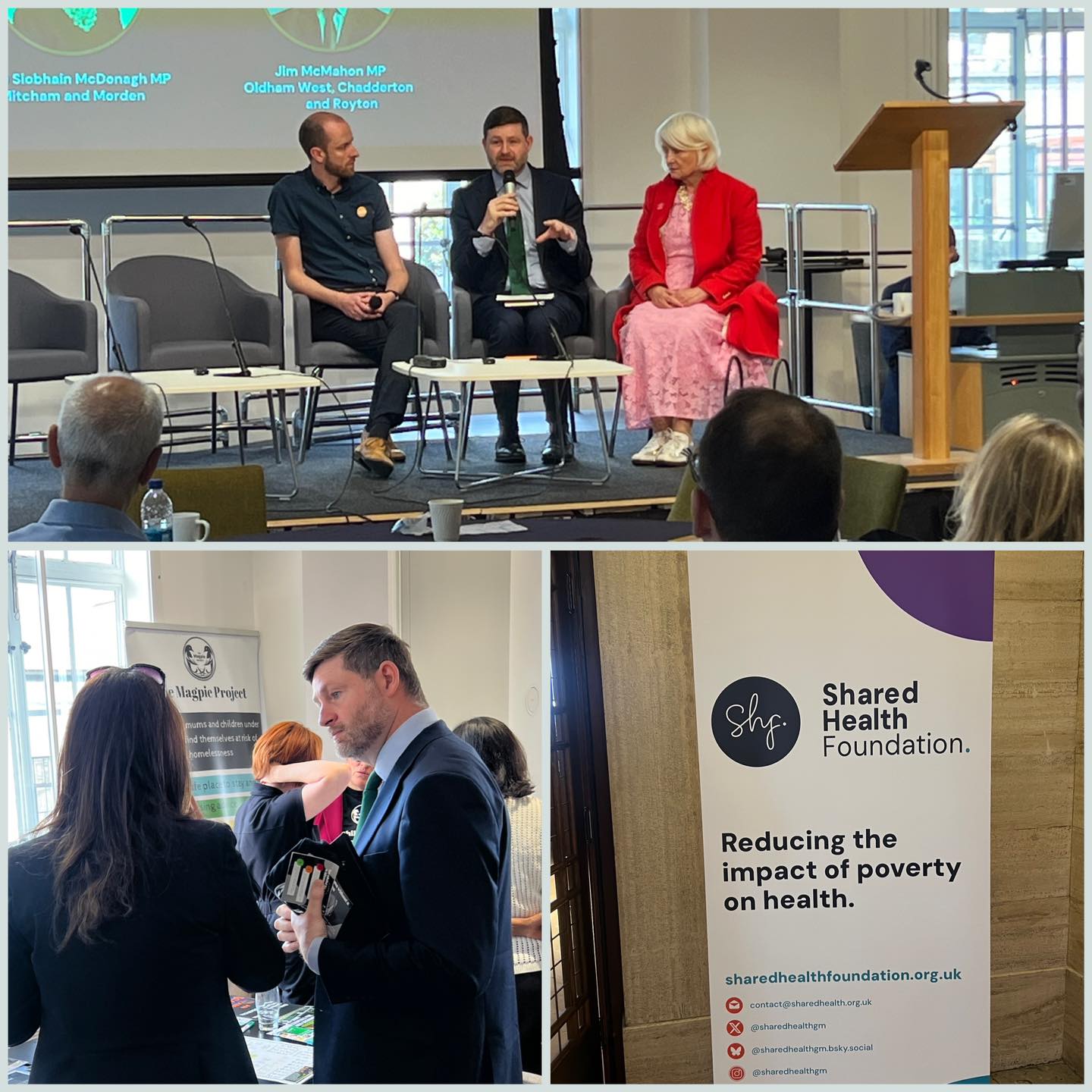
Yesterday, I joined the National Plan to End Homelessness panel at the Shared Health Foundation conference to talk about a crisis that too often gets reduced to statistics.
The numbers matter. In Oldham, 588 children are currently living in temporary accommodation. More than 100 households with children have been there for over a year, 42 have been there for more than two years.
But behind every number is a family trying to build a life.
I visited the temporary accommodation hub with the Shared Health Foundation hub last year and heard first-hand what it’s like for families living in buildings with rodent infestations, poor security, unsafe conditions and children unable to sleep properly before school the next day.
That isn’t temporary. It’s a childhood being shaped by instability.
The reality is that the housing crisis is getting worse. Private rents are rising locally far beyond what many families can afford, too many people are being pushed into poor quality HMOs, and there simply aren’t enough genuinely affordable homes.
We need to tell the human story as well as the story of policy.
That means building more social and affordable homes, improving standards in temporary accommodation, ending exploitative practices in the private rented sector, and making sure families aren’t trapped in housing insecurity year after year.
There are positive steps being taken, including work on a new homelessness strategy, tackling child poverty, billions more to build social housing, and ending Section 21 no-fault evictions. But there is much more to do.
Every child deserves a safe, secure place to call home. That has to be the starting point.
 Jim McMahon OBE MP