
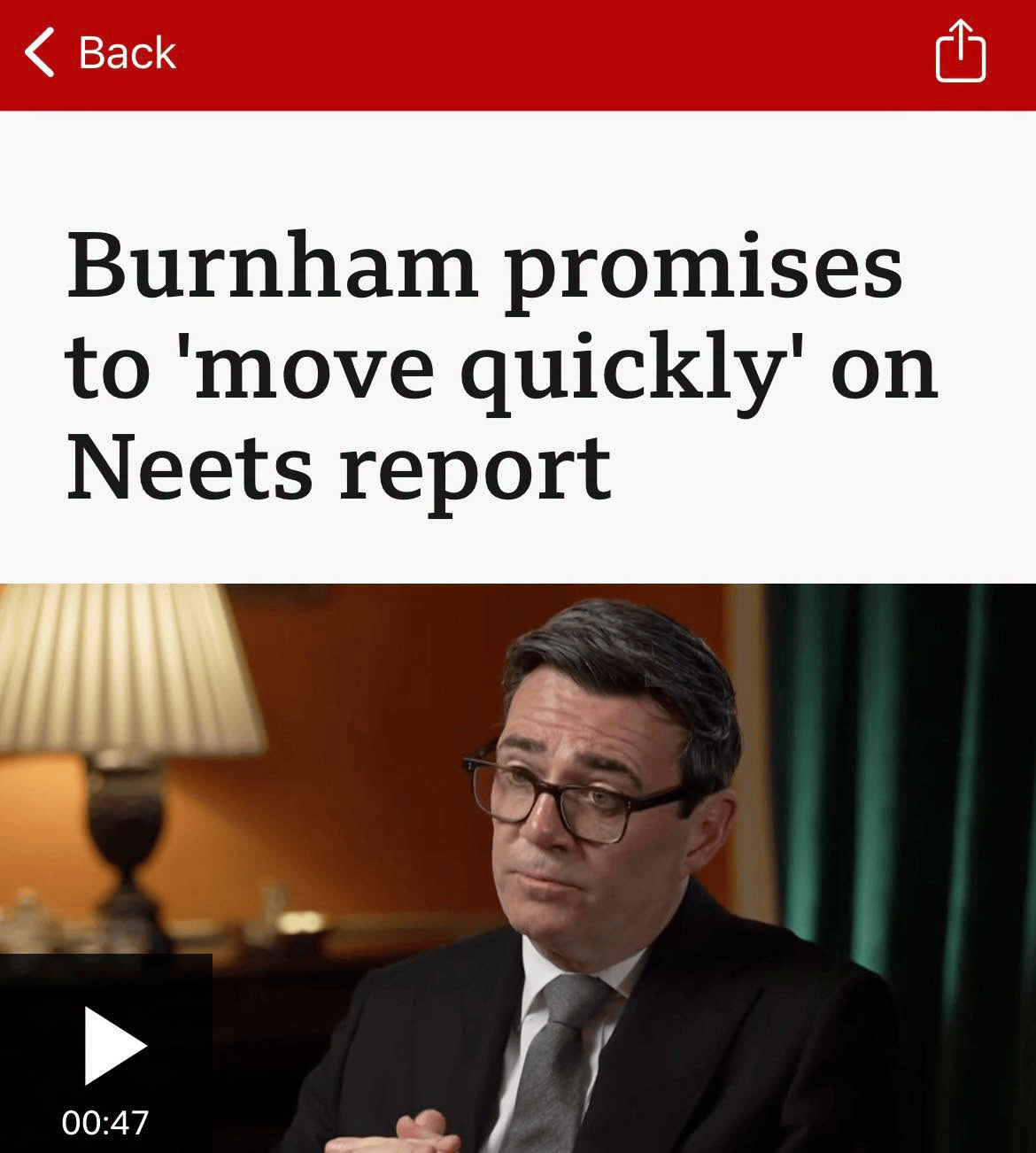
Alan Milburn’s landmark report on young people not in education, employment or training sets out an important challenge and an opportunity we cannot afford to miss.
Nationally, nearly one million young people are not in education, employment or training. In Oldham, 541 young people (7.4%) were recorded as NEET last year. This is up from around 400 (6.7%) in the year before the pandemic.
We inherited a deeply troubling level of youth unemployment and disengagement from the previous Conservative Government. Turning that around must be a national priority.
Some of this is cultural. I have long argued that we do not seem to value skilled working-class jobs in the same way as academic routes. That is not only unfair to young people whose career pathways are too often treated as second best; it is economically and socially incoherent.
Consider one of the major barriers to building new homes and delivering national infrastructure: we simply do not have enough skilled workers. We also face a race to the bottom in parts of the labour market and the replacement of middle-income jobs through technological change and AI. You cannot use a computer to lay bricks, install an electrical system, fit central heating or climb scaffolding to put a new roof on a building. These skills are essential to our economy and our future prosperity.
I know personally how transformative the right opportunity can be. After leaving school at 16, I became an apprentice, and I am proud that my two sons followed the same path. An apprenticeship gives young people skills, experience and opportunities that can shape the rest of their working lives. Every young person deserves that chance.
We need a much more joined-up approach that breaks down barriers between education, skills and employment, and makes sure no young person is left behind.
One example I have raised before is the mismatch between apprenticeship vacancy advertising and the pattern of young people leaving school. Of the apprenticeship opportunities advertised in England, only around 18% are advertised during July and August, when young people are finishing their exams and leaving school. This is a clear mismatch between when opportunities are advertised and when young people need them. Little wonder that so many struggle to find a clear route beyond school.
As much as we need to support young people themselves, we also have to change the system so that it actually works for working-class young people.
Every young person deserves a fair chance to earn, learn and build a future.

